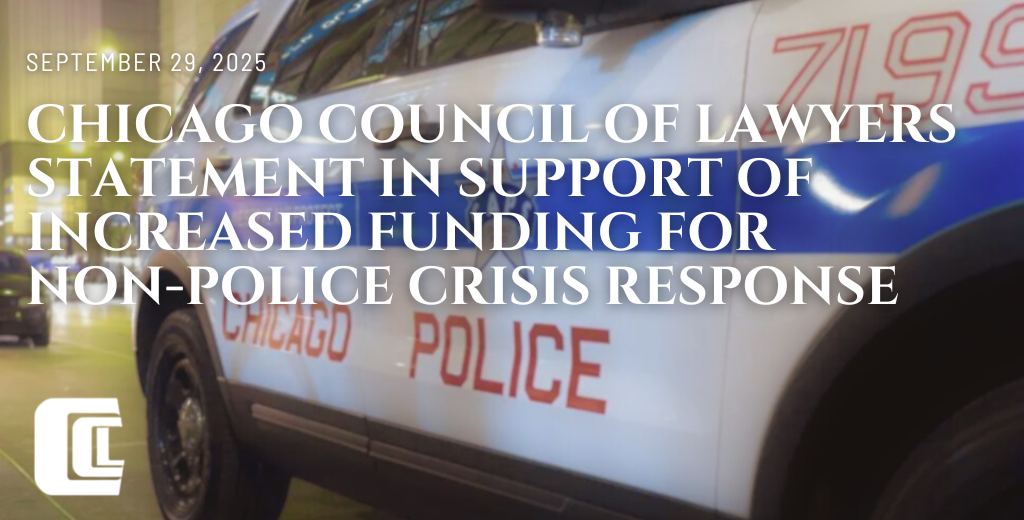
Non-police crisis response teams, also called Crisis Assistance Response and Engagement (CARE) teams, seek to integrate health professionals into the 911 response system.
Non-police crisis response teams have been implemented in numerous jurisdictions with great success. Since 1989, they have spread to over 100 locations, including more than half of the US’s largest cities. Data shows that cities with robust non-police crisis response models have seen both reduced crime levels and cost savings, all while moving away from criminalizing mental health conditions.
Despite Chicago adopting CARE teams in 2020, their impact has been constrained. CARE teams only respond to calls from 10:30 AM to 4:00 PM, Mondays through Fridays, and operate solely within 7 of the 22 police districts. Because mental health crises rarely occur during standard work hours, individuals are often left without access to needed care. In fact, in 2024, fewer than 1% of the more than 96,000 mental health-related 911 calls received a CARE team response.
CARE teams play a vital role in preventing police violence. Not only is police presence inherently escalatory, but officers also lack the appropriate training to respond to mental health needs. As a result, calls for help often culminate in harmful confrontations. For example, in 2015, Chicago police responded to a 911 call for help but ended up fatally shooting the individual in need along with a neighbor. Tragically, events like this are not uncommon: between August 2020 and August 2024, Chicago police used non-lethal force—including tasers, batons, and non-fatal gunfire—against more than 150 people after mental health-related 911 calls. Non-police responses treat mental health crises as the public health issues they are, reducing the risk of police misconduct and community harm. Police are ill-equipped to handle mental health crises, and involving them only puts those in need in greater danger.
With federal COVID recovery funds, which have covered most of the program’s operations, running out, increased funding is essential to sustain and scale CARE services. Expanding the program will close gaps in care while saving lives and reducing costs through effective violence prevention.
The Chicago Council of Lawyers believes that the city must fully fund and expand CARE teams in the upcoming budget to provide citywide, 24/7 non-police crisis response. We call upon Mayor Brandon Johnson and City Council to commit the resources necessary to ensure that all Chicagoans experiencing a behavioral health crisis receive the care they need from trained professionals. It is time to stop criminalizing people living with a mental illness and start providing the treatment and support they deserve.
Julian D. Cohen (he/him) served as an intern with Chicago Appleseed. He is a senior at Brown University, where he studies history and international and public affairs. Guided by a commitment to social justice, he focuses on how structural inequalities and institutional practices shape public policy and affect everyday lives. He is especially interested in confronting the harms of a legal system that prioritizes punishment over fairness and dignity.


